
The Importance of Allied Health Professionals in Concussion Management and Return to Play

Sports-related concussion is a common but serious injury that affects millions of athletes worldwide each year. In contact sports like rugby union, concussion rates are particularly high, making effective management crucial to athlete safety and long-term health. Allied health professionals play a vital role in recognising, managing, and supporting athletes through their recovery and return to play. This post explores how these professionals contribute to concussion care and why their involvement is essential for safe sports participation.
Understanding Concussion in Sport
A concussion is a traumatic brain injury caused by biomechanical forces that impact the brain. It often results in a range of symptoms including physical issues like headaches and dizziness, cognitive difficulties such as memory problems, emotional changes, and sleep disturbances. In the USA alone, an estimated 1.6 to 3.8 million athletes suffer concussions annually, with similar figures reported in UK contact sports.
Rugby union is one of the team sports with the highest concussion rates, which highlights the need for strict protocols and expert care. The injury can vary in severity, but early recognition and proper management are key to reducing complications and speeding recovery.
The Structured Return-to-Play Protocol
Leading organisations such as the Rugby Football Union (RFU), World Rugby, and the National Institute for Health and Care Excellence (NICE) require a structured return-to-play (RTP) protocol after a suspected concussion. This protocol is evidence-based and involves a gradual progression through stages:
Complete physical and cognitive rest
Light aerobic exercise without risk of head impact
Sport-specific exercise without contact
Non-contact training drills
Full contact practice
Return to full competition
This process takes a minimum of six days for adults and must not be rushed, even if symptoms resolve quickly. Rushing back too soon increases the risk of further injury and prolonged recovery.
The Role of Allied Health Professionals on the Sidelines
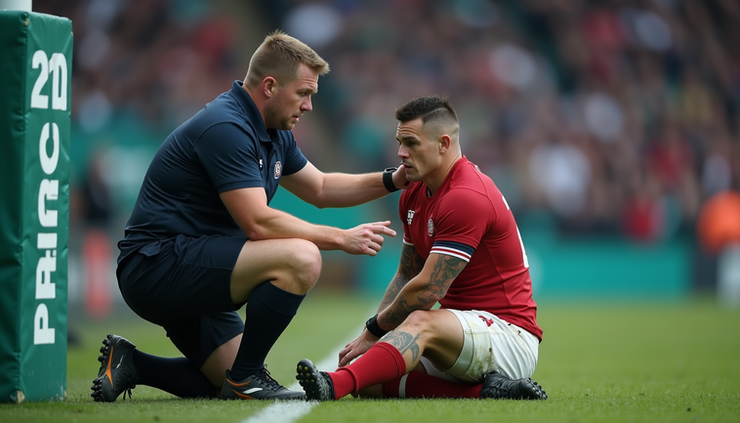
Pitch-side physiotherapists and first aiders are often the first to identify concussion symptoms during a game. Their training in concussion assessment tools such as the Head Injury Assessment (HIA) and the Sports Concussion Assessment Tool 5 (SCAT5) enables them to make quick, informed decisions about removing players from the field.
Early removal from play is the single most important step in reducing the severity of concussion and improving recovery outcomes. Allied health professionals ensure that athletes do not continue playing with a head injury, which could lead to more serious brain damage.
Managing Persistent Post-Concussion Symptoms
While most athletes recover within a few weeks, some experience persistent post-concussion syndrome, where symptoms last beyond four weeks. This condition requires a multidisciplinary approach involving physiotherapists, neurologists, and other specialists.
One often overlooked factor is cervicogenic contributions to symptoms like headache, neck pain, and dizziness. Upper cervical physiotherapy can effectively address these issues by targeting neck dysfunctions that mimic or worsen concussion symptoms.
Vestibular rehabilitation is another key treatment for athletes suffering from balance problems and dizziness after concussion. This therapy uses specific exercises to retrain the brain and inner ear, helping restore normal function.
Practical Example: Supporting Rugby Players in South Kensington
Ali Momeni Pour, a pitch-side physiotherapist with Hackney Rugby Football Club, exemplifies the critical role allied health professionals play in concussion management. Trained in RFU concussion protocols, Ali provides assessment and rehabilitation services at Physiome Kensington, Ethos Sports Centre, Imperial College London.
Athletes in South Kensington benefit from expert concussion assessment and tailored return-to-sport physiotherapy, ensuring they recover safely and regain full function before returning to competition.
Why Allied Health Professionals Matter
Early Detection: They identify concussion symptoms quickly, preventing further injury.
Structured Care: They guide athletes through the RTP protocol with evidence-based practices.
Multidisciplinary Support: They address complex, persistent symptoms with specialised therapies.
Education: They inform athletes, coaches, and families about concussion risks and management.
Safety Assurance: Their involvement reduces the risk of premature return and long-term complications.
Moving Forward with Confidence
Concussion management in sport demands careful attention and expertise. Allied health professionals provide the knowledge and skills necessary to protect athletes and support their recovery. Whether on the sidelines or in rehabilitation clinics, their role is indispensable.
If you or someone you know is recovering from a concussion or needs support with return-to-play protocols, consulting a trained physiotherapist or allied health professional is a crucial step. Safe recovery means better performance and long-term brain health.


Comments